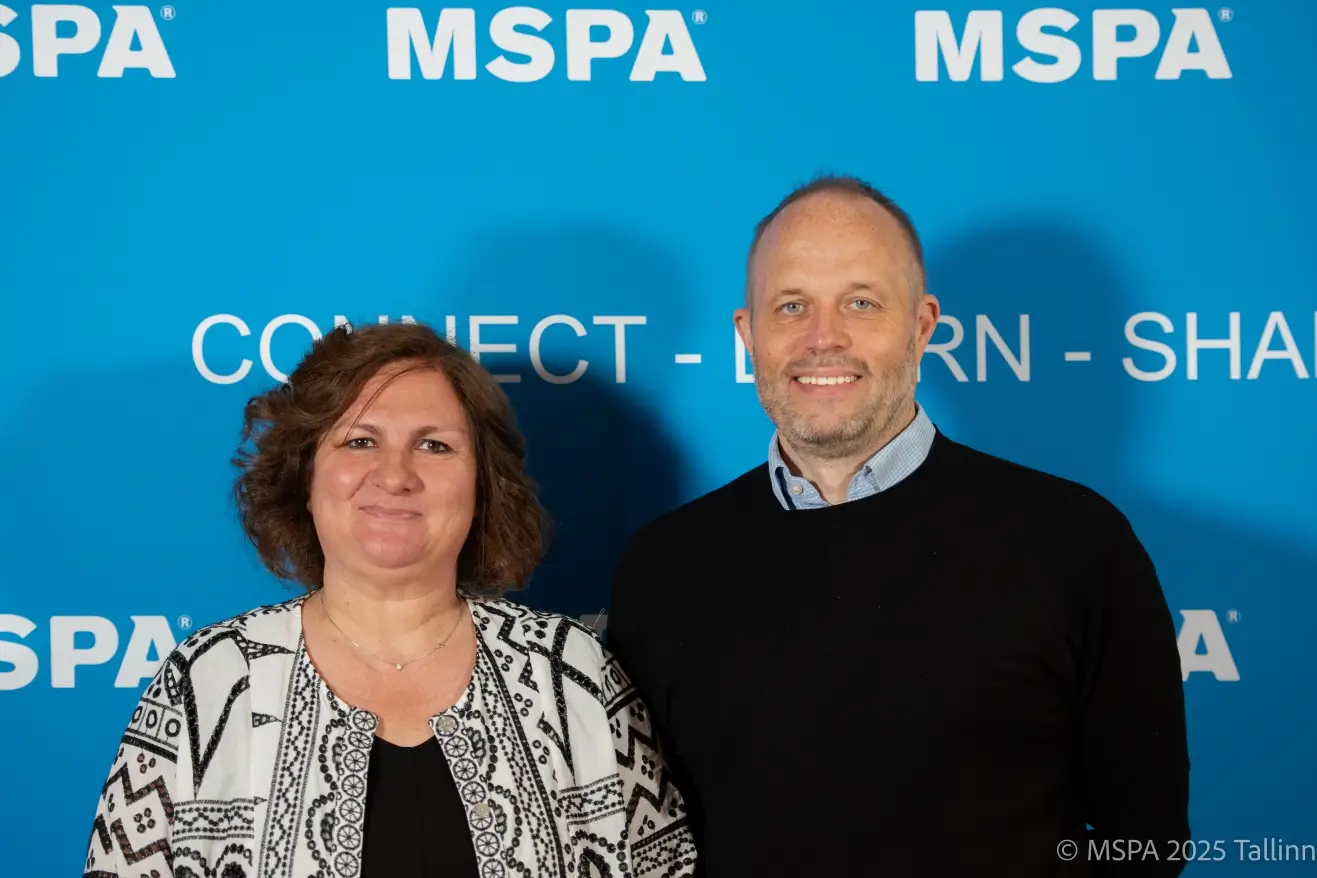
Monica Luciani, co-founder of Mebius and COO of MysteryClient.it, has been elected vice president of the MSPA Europe/Africa board — the Mystery Shopping Professionals Association. The election took place as part of the board renewal that saw Andy Firth of Ipsos assume the presidency of the European and African chapter.
International recognition for Italian mystery shopping
It is the first time an Italian company has held a leadership position in MSPA's governance. MSPA is the only industry association that brings together mystery shopping and customer experience research companies worldwide. MSPA Europe/Africa includes over 475 member companies across dozens of countries, from large multinational research firms to specialised independent providers, and is the body that defines professional standards, ethical codes, and best practices for the discipline at the international level.
The vice presidency is not an honorary title. Board members are volunteers elected by the membership for multi-year terms. They actively participate in setting industry guidelines, organising the annual conferences, running training and accreditation programmes, and driving initiatives that promote the adoption of mystery shopping as a customer experience improvement tool across European and African markets.
For Mebius, this election comes at a significant moment. The company celebrated its twentieth anniversary in 2025 — a journey that began in 2005 when mystery shopping was a virtually unknown methodology in Italy. Monica Luciani built her career starting from training as a Quality Auditor for international certification bodies, combining the culture of industrial auditing with customer experience analysis in retail. This blend of methodological rigour and commercial sensitivity has characterised the MysteryClient.it approach from the start and has led the company to develop fully proprietary technology, a network of 120,000 active mystery shoppers across Europe, and an integrated service ecosystem that includes mystery shopping, social listening, and retail staff training.
Joining the MSPA board confirms that the Italian way of interpreting mystery shopping — less focused on compliance alone and more centred on commercial impact and turning data into concrete action — has achieved international-level recognition. Monica will bring to MSPA the experience gained in key sectors such as automotive, fashion retail, food, and hospitality, where Mebius has developed proprietary methodologies that integrate qualitative interaction analysis with artificial intelligence to identify the micro-behaviours that drive conversion.
The Italian challenge: tourism destinations without residents
Monica's election also brings attention to a challenge that is uniquely Italian and that international brands operating in the country know well: the problem of tourist destinations.
Italy has hundreds of locations — coastal towns, lake resorts, ski villages, art cities — that attract millions of international tourists every year but where almost nobody lives permanently. Portofino, Positano, Taormina, Cortina d'Ampezzo, the Amalfi Coast, the Cinque Terre, much of Sardinia's Costa Smeralda — these are places where luxury brands, hospitality chains, and retail franchises operate stores that serve a predominantly foreign clientele, but where finding a local mystery shopper is nearly impossible.
This is not a minor logistical inconvenience. It is a structural problem that affects the quality and cost of mystery shopping programmes in Italy. Sending a shopper from Milan or Rome to evaluate a boutique in Portofino means the visit loses its natural quality — the shopper is visibly a tourist, not a regular customer, and the staff may adjust their behaviour accordingly. It also means higher costs, longer timelines, and scheduling constraints tied to transport and accommodation.
Mebius has addressed this over twenty years by building a panel that is not concentrated in major cities but distributed across the entire national territory, including seasonal recruitment in tourist areas during peak periods. Our 120,000 registered shoppers include people who live in or near these locations, who know the local context, and who can conduct visits without standing out. For destinations where resident shoppers are genuinely unavailable, we use a structured deployment methodology that accounts for the tourist context — the shopper profile, the cover story, the visit timing — so that the evaluation captures what a real international customer would experience, not what a staff member performs when they suspect a mystery visit.
For international brands that need to monitor their Italian tourist-destination stores alongside their city-centre locations, this capability is essential. It is also one of the reasons why working with a local Italian partner rather than coordinating visits remotely from a European headquarters makes a measurable difference in data quality.
The next MSPA Europe/Africa annual conference will be held in Alicante from 19 to 21 May 2026, where the new board will present its strategic direction for the coming term.
