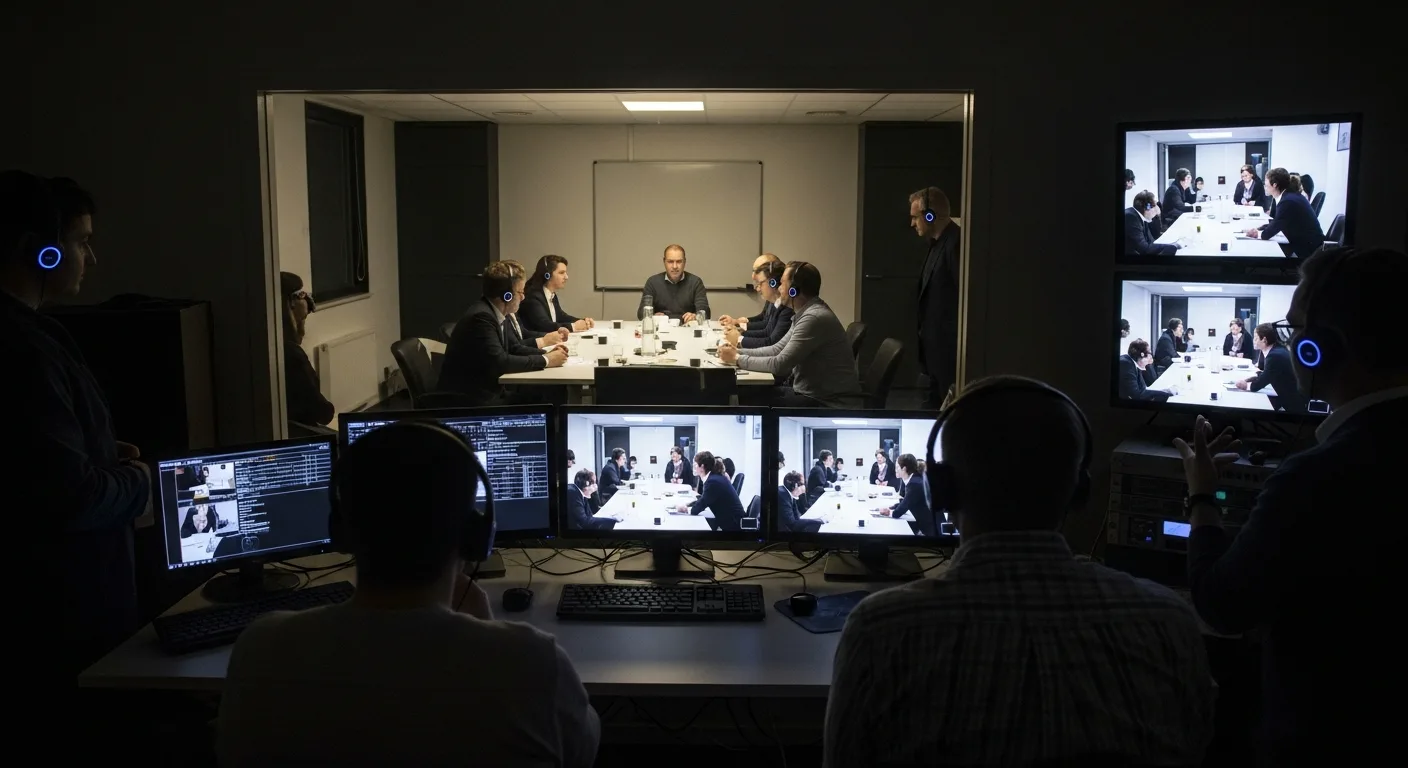
A focus group in Italy is straightforward to run for an Italian team. It becomes a logistics and methodology challenge the moment the people who need to watch it — the brand team, the agency strategists, the client — do not speak Italian. The discussion happens in Italian because that is the only way to get authentic, spontaneous responses; but the value is created when international observers can follow it, in real time, and react. This guide is the practical playbook for running focus groups in Italy with international observers, step by step.
Start with recruitment, not the room
Everything downstream depends on who is in the chair. Recruitment in Italy means a vetted panel, precise screening against the target profile, and incentives calibrated to local expectations — and for low-incidence or B2B targets, specialist free-find recruitment rather than panel volume. Over-recruit and confirm: no-shows are the most common way a session loses a critical quota cell. This is the same discipline we apply across all qualitative fieldwork in Italy.
Set up the room for international observation
A focus group facility built for international work is not a meeting room with chairs. The non-negotiables are a proper one-way mirror between the discussion room and a comfortable viewing room, full HD streaming and recording, radio microphones with noise suppression, and a liaison system so observers can send notes to the moderator without interrupting the session. We go deeper on this in what actually makes a professional research facility in Italy; our Rome facility was built around exactly these workflows and operates as Roma Focus Lab.
Simultaneous translation: the make-or-break element
This is the single factor that decides whether international observation works. The moderator runs the group in Italian; a professional interpreter delivers simultaneous translation into the observers' language through headsets in the viewing room. Two things matter here:
- The interpreter must be a research interpreter, not a generic one — able to convey hesitation, tone, and nuance, not just literal words, because in qualitative work how something is said is the data.
- Brief the interpreter in advance on the topic, the objectives, and the key terminology, so brand names and concepts are rendered consistently.
Done well, observers experience the group as if it were in their own language. Done badly, they watch a delayed, flattened version and miss exactly the spontaneous reactions they flew in for.
Enable remote and hybrid observation
Not every observer can or should travel. A facility set up for international work streams the session securely so clients abroad can watch live, with remote simultaneous translation, and send their questions to the back room in real time. Hybrid setups — some observers in the viewing room, some remote — are now standard and should be planned for from the brief, not improvised on the day.
Moderate across language and culture
The moderator is the bridge. Beyond running a clean discussion guide, an effective moderator for international clients manages the gap between what Italian respondents express and what foreign observers expect to see — flagging culturally specific reactions, regional nuances, and idioms that would otherwise be lost in translation. A short debrief between waves, with the observers and the moderator together, turns raw reactions into shared interpretation while the session is still fresh.
Plan the logistics around the client
The small things protect the big investment: realistic scheduling that accounts for Italian timing, catering and a comfortable viewing room for long observation days, and a back-room workflow that lets observers adjust the guide between groups. International observers are spending a travel day on this; the facility should make that day productive and comfortable.
Get compliance right
Recording participants — audio or video — and sharing the stream with observers triggers obligations under the GDPR as implemented in Italy through the Garante per la Protezione dei Dati Personali: explicit informed consent, defined retention, and controlled access to the recordings. Handle this before the first participant arrives, not after.
In summary
Running focus groups in Italy with international observers comes down to five things done properly: serious recruitment, a room built for observation, research-grade simultaneous translation, real remote/hybrid options, and a moderator who bridges language and culture — all on a compliant footing. Get them right and an Italian group delivers the same usable insight to a London or New York team as one run in their own city.
Planning qualitative research in Italy? See how we support international agencies and brands or get in touch to scope your sessions.