When an international agency wins a multi-country study that includes Italy, the Italian leg is often the one that causes the most friction. Not because the country is difficult, but because fieldwork is local by nature: it depends on language, on a respondent culture, on a regulatory framework, and on physical infrastructure that do not travel with the questionnaire. This guide explains how market research fieldwork actually works in Italy, the choices you face on each method, and what to require from a local partner so the Italian data slots cleanly into your global dataset.
What "fieldwork in Italy" actually involves
Fieldwork is the data-collection layer of a research project: recruiting the right respondents, running the interviews or sessions, and delivering clean, comparable data. For an international agency, the work splits into two families — quantitative and qualitative — each with its own Italian specifics. Mebius operates as the local fieldwork partner for both, a role we describe in our services for market research companies.
The deliverable is never just "data collected in Italy." It is data collected to the same definitions, quotas, and quality controls as the rest of your study, so that Italy is comparable to Germany, France, or the UK rather than an asterisk in the report.
Quantitative fieldwork: the data-collection methods
Quantitative studies in Italy rely on the same toolkit you use elsewhere, but the right mix is market-specific:
- CAWI (online) — the default for speed and cost, but the quality depends entirely on the panel behind it: its size, its sourcing, and how aggressively it is de-duplicated and checked for fraud.
- CATI (telephone) — still valuable in Italy for older segments, B2B, and hard-to-reach targets, where online panels under-represent the population.
- CAPI / face-to-face — for in-home, in-street, or in-store interviewing where physical presence or product interaction is required.
- Mobile and hybrid — increasingly used for in-the-moment and location-based data capture.
The method is rarely the hard part. The hard part is the quota design and the sampling: an Italian national sample that ignores the country's strong regional structure will produce averages that describe no real respondent.
Qualitative fieldwork: focus groups, IDIs and beyond
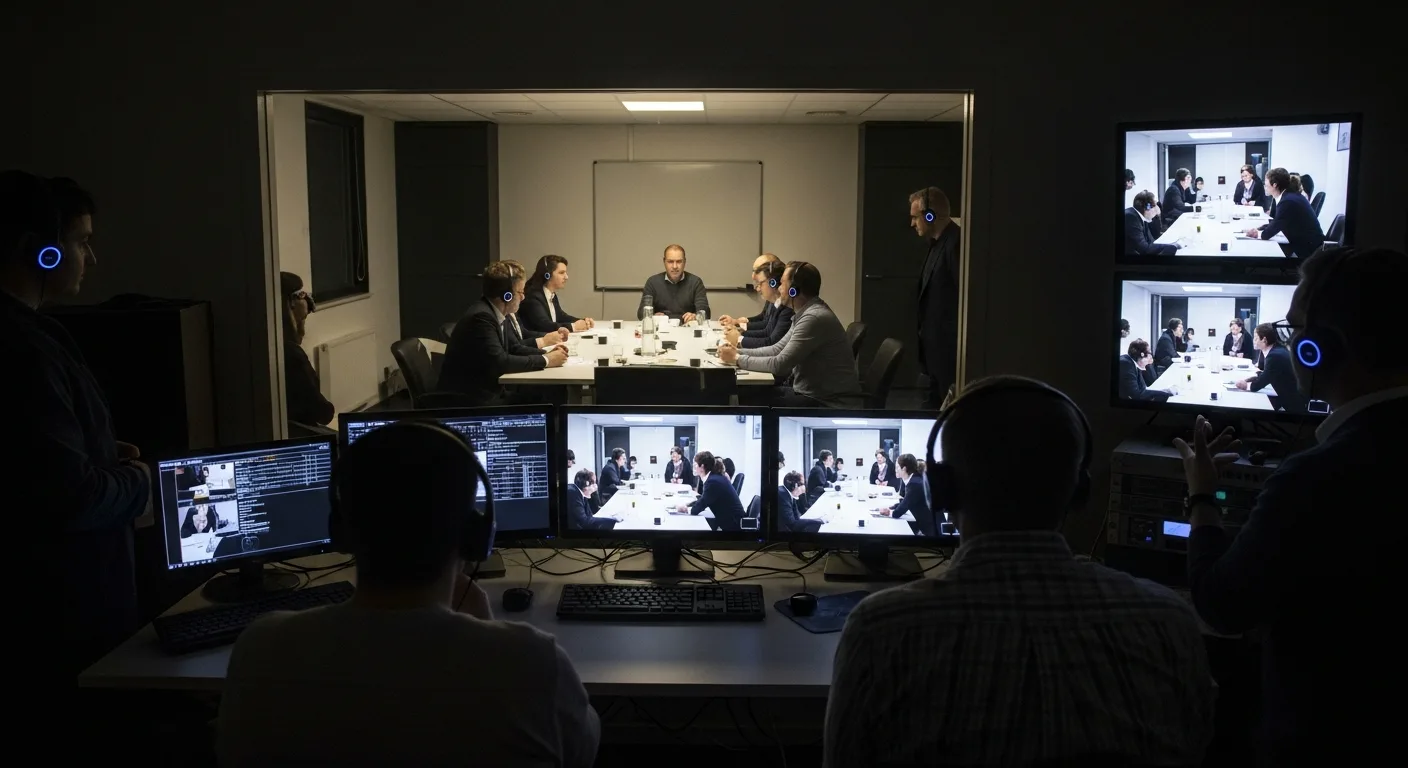
For qualitative work — concept tests, packaging evaluations, segment exploration — the focus group remains the instrument that delivers the richest insight, and here the infrastructure is decisive. The difference between a session that produces usable insight and one that yields only a transcript is decided largely outside the methodology, on the ground of the facility where the session takes place.
Running qualitative fieldwork in Italy for an international client adds a specific requirement: observers and clients who do not speak Italian must still be able to follow, in real time, a discussion conducted in Italian. That means simultaneous translation, remote viewing, and streaming built into the room — not improvised. We built our research facility in Rome around exactly these international workflows; it operates under its own brand, Roma Focus Lab, and is also presented on our facility page. The same logic extends to in-depth interviews, ethnography, usability and product tests.
Recruitment and the respondent panel
Every method stands or falls on who actually sits in front of the questionnaire or the moderator. Recruitment in Italy means a vetted, sufficiently large panel, accurate screening against your target profile, and incentive structures calibrated to local expectations. For low-incidence or B2B targets, free-find recruitment by specialists matters more than panel size. A weak recruit cannot be rescued by a good moderator or a clever analysis.
The specifics of running fieldwork in Italy
Four factors change how a study must be executed on the ground:
- Language and nuance. Translation and back-translation are not clerical steps; a mistranslated scale or a culturally off prompt quietly distorts the data.
- Strong regional variation. Behaviour, language register, and even willingness to participate differ across the North, Centre, and South — the same misreading that trips up brands entering the Italian retail market.
- Data protection. Fieldwork must comply with the GDPR as implemented in Italy through the Garante per la Protezione dei Dati Personali — consent, retention, and special care for audio and video recording.
- Response culture. Contact rates, preferred channels, and the tone that earns participation are local, and they shape timelines and costs.
Standards and quality control
For an international agency, the credibility of the Italian data depends on the standards behind it. Mebius is a member of ESOMAR, a Board Member of MSPA Europe & Africa, and ISO 9001 certified, with fieldwork run on the principles of the ISO 20252 standard for market, opinion and social research. In practice this means documented sampling, validated translations, interviewer briefing and monitoring, and the data-quality checks — de-duplication, speeder and straight-liner detection, back-checks — that let you defend the numbers to your own client.
One local partner vs coordinating directly
You can coordinate Italian fieldwork yourself, vendor by vendor, or hand the whole leg to a single accountable local partner. For most international studies the second is faster and lower-risk: one point of contact, one quality standard across quant and qual, one party responsible for recruitment, compliance, and delivery on your timeline — and a team that already knows where Italian fieldwork tends to go wrong.
In summary
Fieldwork is the part of a study that does not travel: it has to be rebuilt locally, to your global specification, every time. In Italy that means the right method mix, a serious panel, infrastructure designed for international observation, full GDPR compliance, and recognised quality standards. Get those right and the Italian leg stops being the difficult one.
Planning a study that includes Italy? See how we support international research agencies or get in touch to scope your fieldwork.