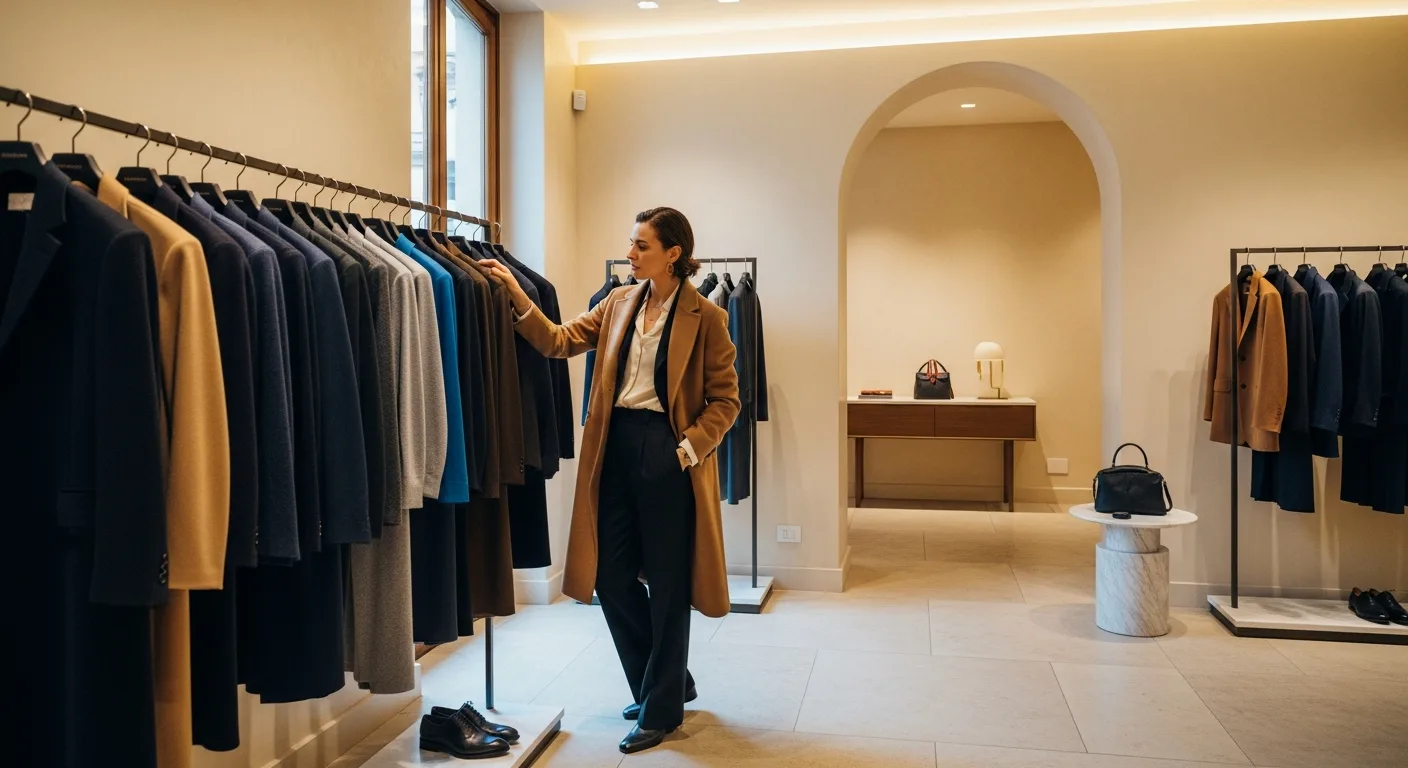
If you manage a retail network that includes Italy — directly owned stores, franchises, shop-in-shops, or a distribution agreement with local partners — you already know that what head office decides and what the customer actually experiences in the store are rarely the same thing. Mystery shopping is the method that measures that gap objectively, store by store, interaction by interaction. This guide explains how it works in Italy specifically, what it measures, the local factors international brands consistently underestimate, and how to set up a programme that delivers data you can actually act on.
What mystery shopping is — and why the Italian context matters
Mystery shopping is a field-research methodology in which trained evaluators simulate a normal buying process to measure, objectively and against pre-defined standards, the quality of the in-store experience. Unlike satisfaction surveys or online reviews, it captures what really happens on the sales floor, without the distortions of memory or social desirability. If you want the methodology in detail, we cover it in our overview of what mystery shopping is and how it works.
The principle is universal, but its execution is not. Running a programme in Italy from abroad is structurally different from running one in the UK, Germany, or the US — and treating the two as interchangeable is the single most common reason international brands end up with data they cannot trust.
Why international retailers need a structured programme in Italy
International brands tend to arrive in Italy with a service playbook that works at home, apply it rigidly, and then struggle to understand why their Italian stores underperform on experience metrics compared to the same format elsewhere. The problem is almost never the Italian staff. It is a misreading of how the Italian retail environment works — a theme we explore in depth in what international brands get wrong about the Italian retail market.
A structured mystery shopping programme replaces assumptions with evidence. It tells you whether your brand standards are actually being delivered at the point of sale, where the gaps are, and which behaviours are costing you conversions — in a market where you may not have the local visibility you have in your home country.
What a mystery shopping programme in Italy actually measures
A well-designed programme starts from the service standards you want to protect, then builds a detailed scenario around them. The evaluator knows exactly what to observe and how to behave to replicate your target customer. A typical visit captures:
- Welcome and approach — timing, tone, and whether the customer is acknowledged at all.
- Needs analysis and product competence — does the salesperson ask the right questions and master the range?
- Cross-selling and the close — is there a structured attempt to add value and complete the sale?
- Environment and compliance — layout, cleanliness, stock availability, pricing, promotional execution, brand standards.
- Relationship building — data capture, follow-up offers, the request for a return visit.
Everything is documented through a structured questionnaire that combines objective rating scales with qualitative comments, frequently supported by photographic or audio evidence. The output is not an opinion — it is a comparable dataset.
The Italian specifics international brands must account for
Four characteristics of the Italian market change how a programme must be designed:
- Strong regional variation. Customer expectations, communication style, and even buying rhythms differ markedly between the North, Centre, and South. A sample that ignores this produces national averages that describe no real store.
- A service culture with its own codes. What reads as "attentive" in Milan can read as "intrusive" in another context — and Northern-European service scripts often misfire. Standards have to be calibrated to the local code, not imposed on it.
- High density of independent and franchised points of sale alongside the chains, which means execution consistency is harder to guarantee and more important to verify.
- A specific regulatory environment. Fieldwork must comply with the GDPR as implemented in Italy through the Garante per la Protezione dei Dati Personali, particularly when visits involve audio or video recording.
Standards that guarantee comparable data
For an international programme, the value of the data depends entirely on its consistency and credibility. That is why methodological standards matter as much as the fieldwork itself. Mebius operates as a member of ESOMAR, a Board Member, Elite Member and Vice President of MSPA Europe & Africa (Mystery Shopping Professionals Association), and under ISO 9001 certification — and our mystery shopping follows the principles of the ISO 20252 standard for market, opinion, and social research.
These are not badges. They are what allow your Italian results to sit in the same dashboard as your German or British results and actually mean the same thing.
From measurement to improvement: closing the loop
Measurement is only half the value. A mystery shopping result that is filed away changes nothing; a result that feeds back into training and incentives changes behaviour. Our work is built around exactly this loop — monitor, train, reward — described in the Mebius Method. For international clients, this means the programme does not just tell you where Italy stands; it helps move it.
Sectors where mystery shopping delivers most in Italy
The method applies anywhere a customer meets your brand, but a few sectors see particularly high returns in the Italian market:
- Luxury and fashion retail — where Italy is both a key market and a global benchmark, and where experience is the product.
- Automotive — dealer and service networks, where a single interaction can decide a high-value purchase. We run dedicated mystery motorist programmes for exactly this.
- Hospitality and food service — where consistency across locations is the whole proposition.
- Banking, insurance, and telecoms — where compliance and advisory quality must be verified, not assumed.
How to choose the right partner
The reliability of your data depends on the partner who collects it. Certifications, a vetted and sufficiently large local panel, proprietary technology, and genuine understanding of regional nuance are the things that separate usable insight from an expensive transcript. We set out the full checklist in how to choose the right mystery shopping partner in Italy.
With over two decades of fieldwork across every Italian retail sector and a panel of more than 120,000 active mystery clients across Europe, Mebius designs and manages programmes for international networks that need their Italian stores measured to the same standard as everywhere else.
In summary
Mystery shopping is the most precise way to see your Italian stores through your customers' eyes — but only if the programme is built for the Italian context, follows recognised standards, and closes the loop back into training. Done well, it turns a market you may not fully control into one you can measure, compare, and improve like any other.
Want to benchmark your Italian network? Discover our mystery shopping services or get in touch to discuss your project.