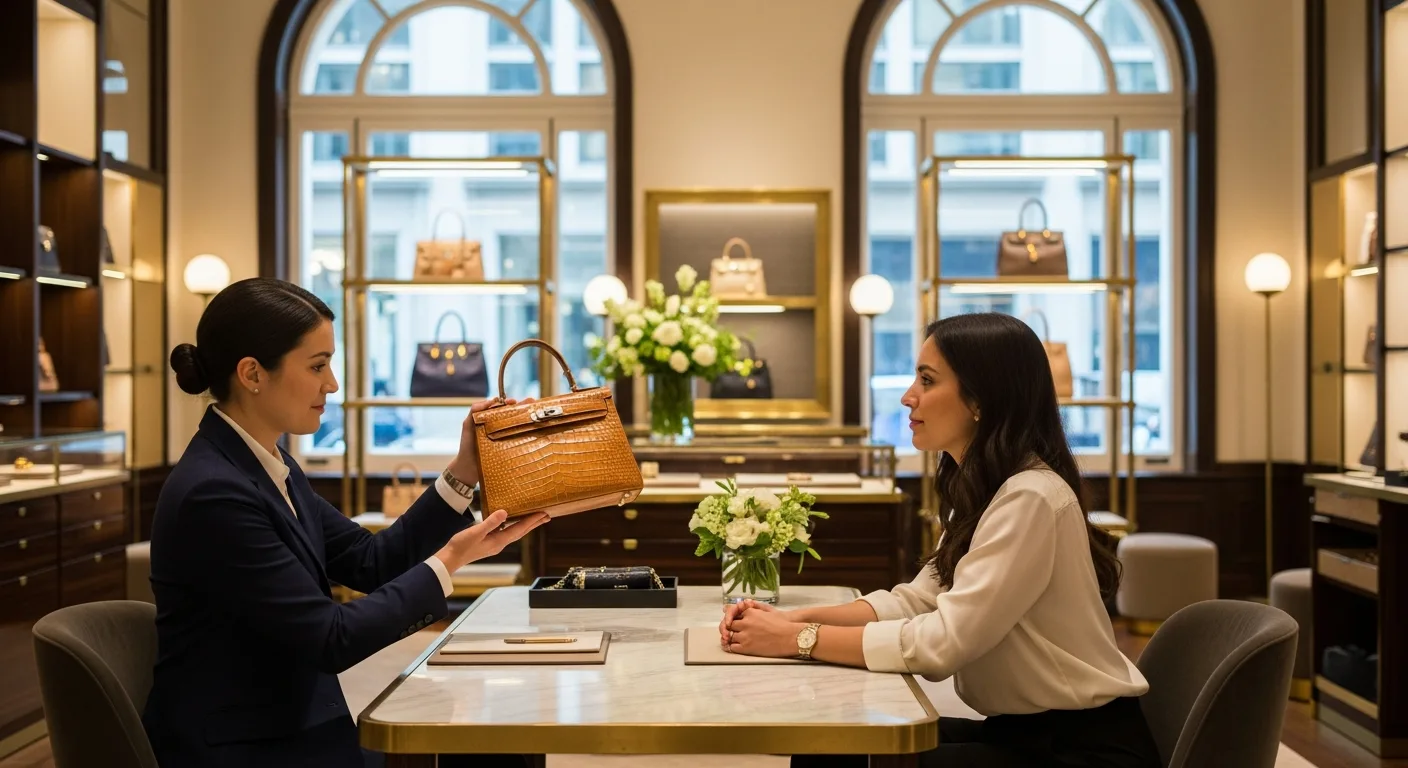
In luxury, the experience is the product. Two customers can buy the same handbag; what they pay the premium for is how it felt to buy it — the welcome, the attention, the ritual, the sense of being recognised. Italy is both a primary market and a global benchmark for this, the home of many of the maisons that define the category. Which is exactly why measuring the in-store experience here, objectively and consistently, matters more than anywhere else. This is where mystery shopping earns its place in a luxury brand's toolkit.
Why luxury is different to measure
In mass retail, a mystery shopping programme often focuses on speed, accuracy, and basic service standards. In luxury and fashion, the variables are subtler and harder to script:
- The welcome and the ritual — timing, eye contact, the unhurried pace that signals exclusivity rather than pressure.
- Product storytelling — does the advisor convey craftsmanship, heritage, and material, or just features and price?
- Clienteling — is the customer treated as a relationship to build, with data captured and follow-up offered, or as a single transaction?
- The emotional register — the hardest thing to measure and the most important: did the customer feel elevated, recognised, special?
A luxury mystery shopping programme has to capture these qualitative, experiential dimensions with the same rigour a mass programme applies to checkout time — which requires evaluators trained for the category and a questionnaire designed around the brand's specific service codes.
Consistency across a fragmented channel landscape
A luxury brand in Italy lives across very different environments: directly operated flagship boutiques, shop-in-shops inside department stores, wholesale partners, and outlets. The promise has to feel coherent across all of them, yet the further a touchpoint sits from head office, the more the experience tends to drift — the same execution-consistency challenge that makes retail audits so valuable. Mystery shopping is how a maison verifies that the boutique experience in a flagship is actually being delivered in a partner-run shop-in-shop three regions away.
The Italian context
Italy adds its own specifics. Customer expectations and the codes of "attentive" service vary between the North, Centre, and South — a national standard imposed without local calibration can misfire, the same misreading that catches brands entering the Italian retail market. And the Italian luxury customer often has a sophisticated, long-standing relationship with the category, which raises the bar for what counts as a credible, elevated experience. Evaluators have to be profiled to match the real clientele to gather authentic data.
From measurement to elevation
The point of measuring is not to police staff; it is to protect and raise the experience. The findings feed directly into training and clienteling coaching — which advisor behaviours correlate with conversion, where the ritual breaks down, which stores need attention — in the measure-train-reward loop of the Mebius Method. For a luxury brand, a structured programme turns "we hope the experience is on standard" into "we know, store by store, and we are improving it."
In summary
For luxury and fashion, the in-store experience is the brand made tangible — and in Italy, where the category is benchmarked, it has to be exceptional and consistent across every channel. Mystery shopping designed for luxury captures the rituals and the emotional register that define the premium, verifies them across a fragmented channel landscape, and feeds the insight back into the experience itself.
Protecting a premium experience across your Italian network? Discover our mystery shopping services or get in touch.
Read also
- Mystery shopping in Italy: the complete guide for international retailers
- Retail audits and in-store compliance checks across Italy
- Customer experience measurement for international brands in Italy
Two companion reads on the training side: luxury retail training and upselling and cross-selling in retail.